
Arithmetic
Developing analytical thinking, increasing concentration and strengthening memory.
projectmath is a personalised maths learning system. It maps what your child already knows, finds the gaps and gives them exactly the exercise they need, every single day. Fifteen minutes a day.
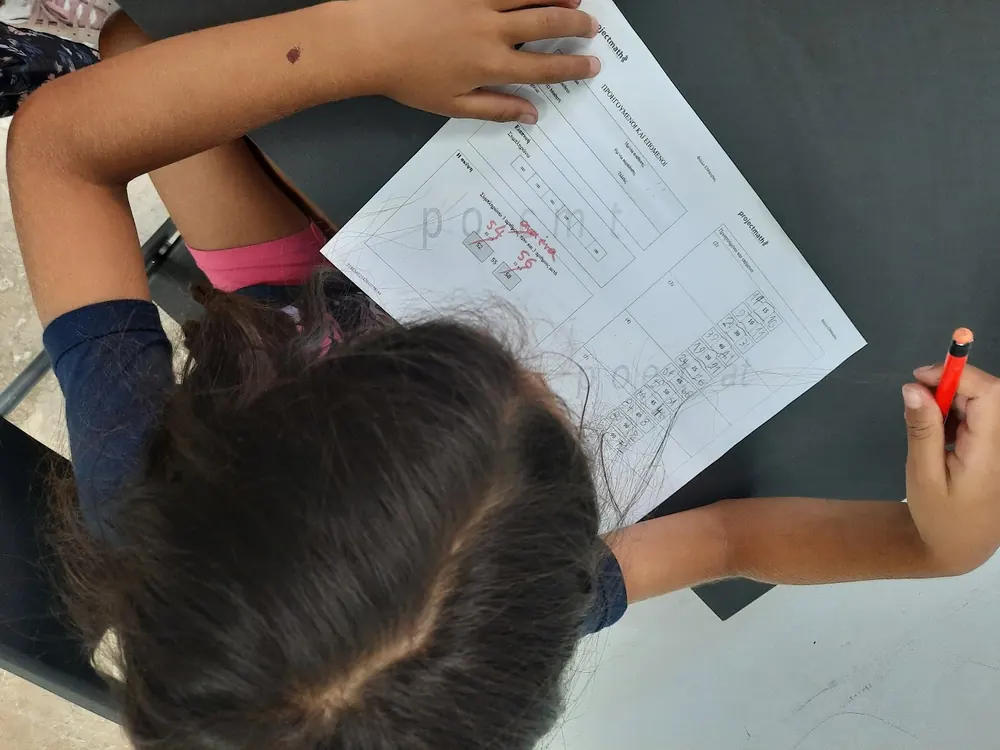
A new personalised approach to mathematics for children aged 5–12. Its purpose is to strengthen a child's mathematical skills while building their confidence and activating their capacity to work independently.

The system draws on six structures. Working both in combination and independently, they compose each student's mathematical profile every week — and that profile is unique.
Developing analytical thinking, increasing concentration and strengthening memory.

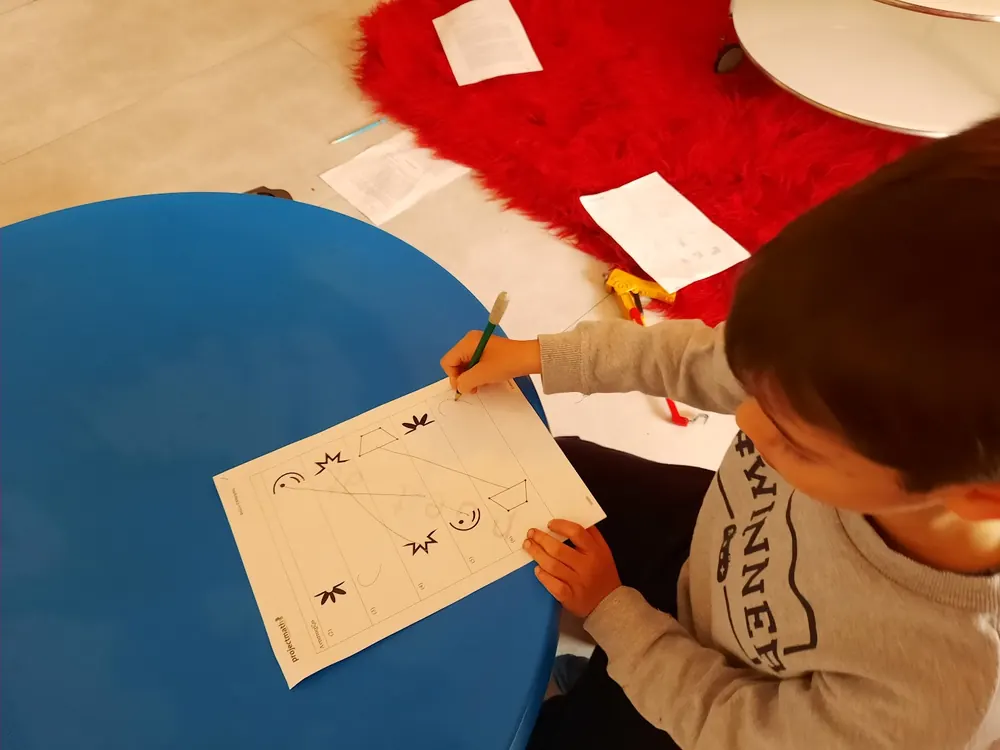
Begins with recognising concepts and shapes, moves on to drawing them and ends with measurements and problems. It encourages the use of set squares, compasses and protractors, building spatial reasoning.

Patterns are a cornerstone of mathematical knowledge. From nursery age children learn to recognise numerical and geometric patterns, sharpening their observation and precision of thought.

Re-discovery as the main tool for active learning. Exploring, shaping and absorbing techniques; activating investigative ability.

Collecting, processing, interpreting and presenting data. Developing inductive reasoning and drawing conclusions.

Discovering and expressing processes of generalisation. Connecting multiple concepts — recognising, comparing, relating and proving them.
The child completes a Knowledge Mapping Sheet. It is not an assessment test — it is the map that shows what they have already mastered and where they need support.
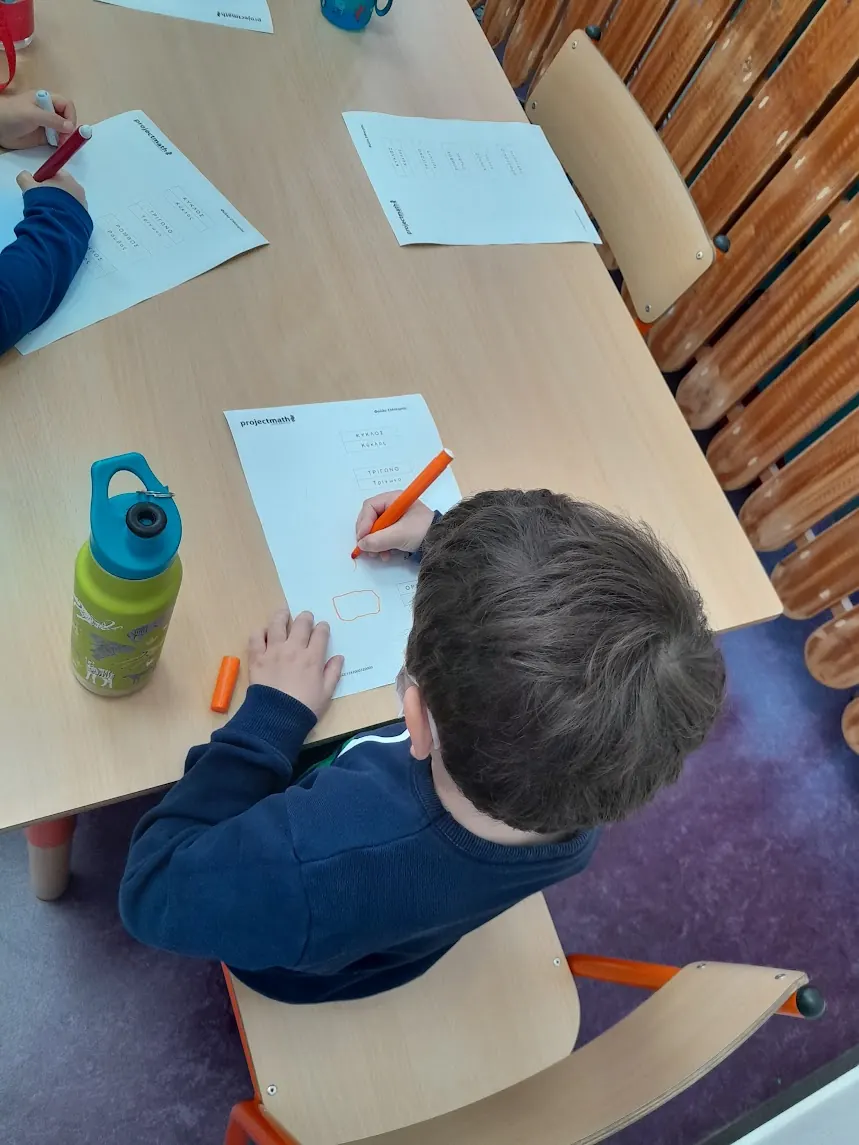
Each week the student receives five Experience Sheets — one a day, fifteen minutes each. Twice a week they spend half an hour at the centre.
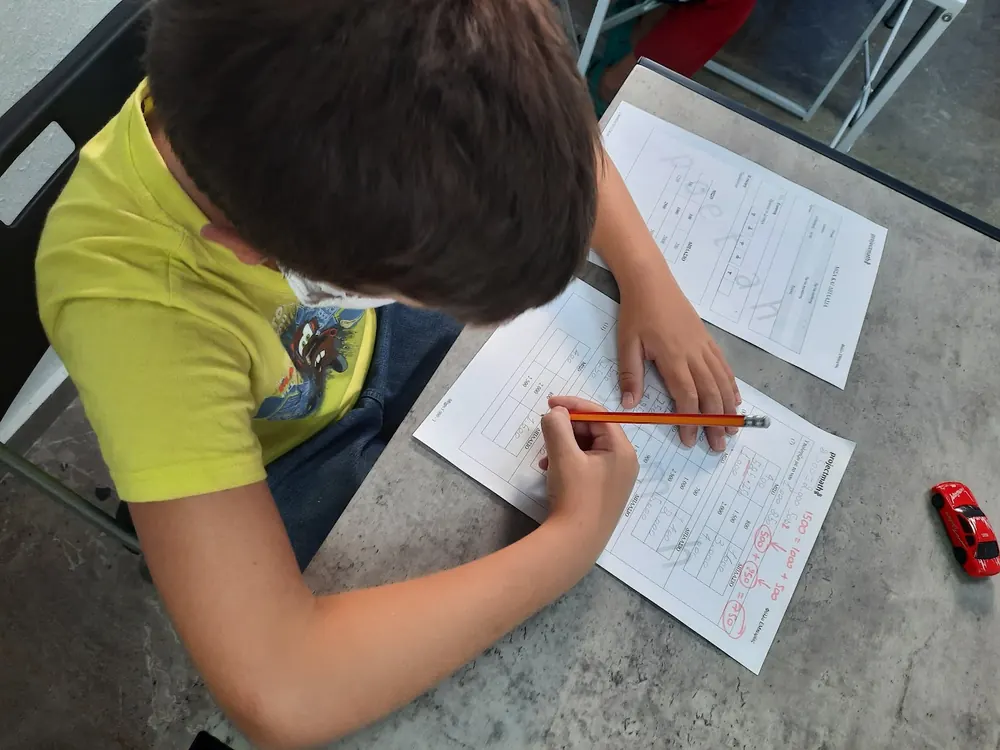
Tutors record the "dots" — the questions answered incorrectly. The system spots the patterns behind them and decides what the next sheets will be.

She studied Statistics at the University of Piraeus, specialised in Financial Mathematics in England and built a career as a business consultant. Her lasting ambition, however, was education — a dream realised when she founded her own secondary tutoring schools.
The projectmath system is not something new to me; it is the written form of the way I have taught my students for years.
— Valentina Alexandraki
The heart of the method. A highly personalised way of understanding and practising both what the child already knows and what they have not yet absorbed or been taught. Just 15 minutes a day.

Mathematics as it appears in real life: designing a playground, opening a pizzeria, planning a fundraising campaign — even launching rockets.

Mathematical challenges tackled in small groups of three or four. Each completed challenge leads to the next — which team will escape the classroom first?

Activities during the holidays: Christmas, Easter, summer and Pi Day (14/3). Teachers, parents and children together in a beautiful mathematical world.



This website uses no cookies and collects no browsing data. Information is stored only if you fill in the contact form. Learn more